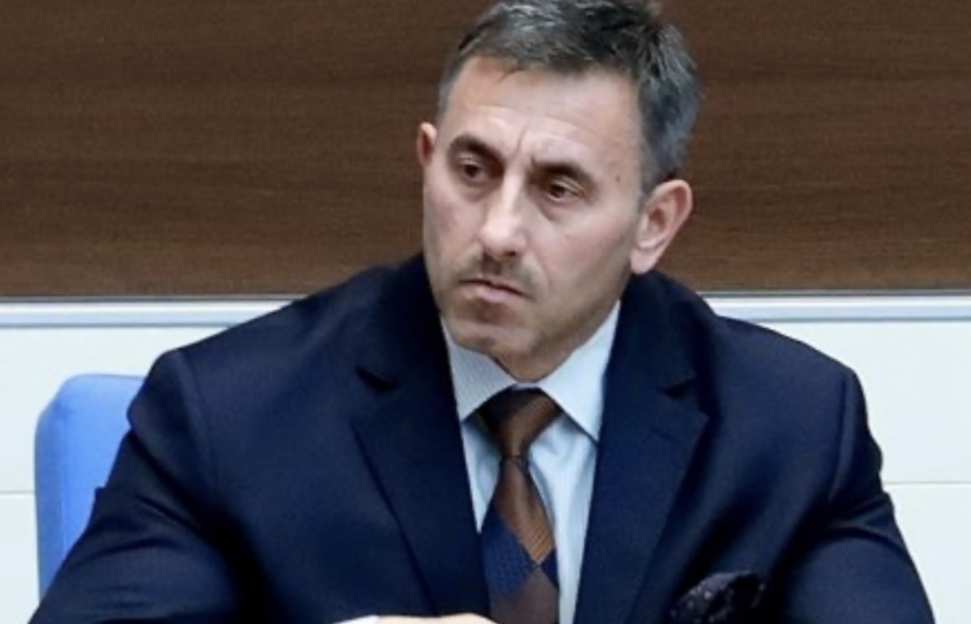
- Will there be fuel - gasoline and diesel - for Bulgarians planning Easter, vacations, or simply traveling for work and taking their children to school?
- There is fuel and there will be fuel. At present, we have no grounds to expect any problems with quantities. Less than half of the refinery’s capacity is sufficient to supply the Bulgarian market.
We also maintain the required stocks of crude oil and petroleum products under the Act on Compulsory Stocks of Oil and Petroleum Products and, if necessary, by decision of the state, they can be released. Our fellow citizens can rest assured.
- There has been a lot of discussion in recent days about fuels and whether their price increase is justified. What part of the price is determined by the international market and what part by local costs and taxes?
- Fuel prices are market-based and formed clearly and transparently. The base prices are determined based on international quotations on the Platts Mediterranean platform. These are the market prices followed by all operators not only in Bulgaria, but throughout the region. Any deviation from them would represent a distortion of the market with all the resulting consequences.
To form the final retail price - that is, the price at the pump - the relevant trader’s costs are added to these base prices, including for the biocomponent, as well as excise duty, the minimum level of which is determined by the European Union. Bulgaria applies exactly this minimum level, which depends on the type of fuel. VAT, which is determined by Bulgarian legislation, is then added. LUKOIL strictly applies all rules and laws regarding pricing.
- Have the latest changes in oil quotations already been reflected in retail prices, or should another increase be expected?
- Yes, they have been reflected, and that is the only possible way for the refinery to operate. Let me explain the principle behind reflecting these changes with a purely illustrative example - the figures are, of course, not real.
Let us assume that 10 days ago we bought 10 tons of oil for 1,000 euro, processed it and obtained fuels worth 1,300 euro at prices from 10 days ago. Today, however, 10 tons of oil already cost 1,400 euro. The refinery operates in a continuous technological cycle - deliveries and sales do not stop.
If we now sell the fuels obtained from the cheaper oil for 1,300 euro at prices corresponding to the cheaper oil, we will not be able to buy the next 10 tons of oil because we will not have such revenue. We will only be able to buy a little more than 9 tons. In the next cycle we will have money for only 8 tons of oil. After several such cycles, the danger of the refinery stopping due to inability to purchase raw material becomes completely real.
In this sense, retail trade cannot exist independently of wholesale trade. In order for the refinery to secure the purchase of oil at current prices, it must sell its inventories at prices based on the current Platts quotations for finished products - gasoline and diesel. These higher wholesale prices are directly reflected in higher retail prices at gas stations. At present, prices are the lowest possible while complying with market-based pricing principles. Whether there will be a further increase in prices depends on the development of the conflict in the Middle East and on international quotations for oil, diesel and gasoline.
- Is it possible for the Burgas refinery to keep prices down? What is the mechanism by which you purchase oil?
- The mechanism is market-based and grounded in legislation and established international practices. As I explained during the hearing in the National Assembly, the refinery cannot hold prices down because such behavior would lead to violations of the law and would also create conditions in which the refinery could be unable to purchase sufficient volumes of raw material.
But allow me to place the issue of fuels in a broader context. I believe it is important for people to know this. There is a totally false myth that oil refineries are “swimming in money.” This is not true, especially in Europe, where oil refining capacity has been steadily declining since 2009. During this period, 30 refineries, representing 37% of total capacity in Europe, closed down due to an unfavorable business environment and, as a result, poor financial performance.
Europe is becoming increasingly dependent on fuel imports from other regions. Against this background, the strategic importance of LUKOIL Neftohim Burgas for Bulgaria and the region is growing, but it is not immune to the negative trends in Europe and now also in the Middle East.
These are objective facts that must be clearly taken into account. The pre-election environment cannot be a reason for imprudent statements on this topic, because in the end the national security of the country is put at risk. LUKOIL treats the Bulgarian market and the Bulgarian economy responsibly, and I would like to call on everyone to act responsibly toward the company.
- You claim that fuels at LUKOIL gas stations are at the lowest prices on the market. What is this due to?
- We understand the importance of fuels not only for individual consumers, but also for the economy of the country as a whole. That is why we are making extraordinary efforts to ensure the lowest possible, yet still market-based, fuel prices.
Since I took over the management of LUKOIL’s companies in Bulgaria, we have carried out a number of optimizations of costs both in production and in trade. We are obliged to sell at market prices - there is no way to sell at prices below market levels without putting the refinery’s operation at risk.
The fuel market in the region is highly integrated and depends on a whole range of factors, as well as international quotations. Prices are determined by the market and do not depend only on the refinery’s production costs. Even if we were to announce them, as some media demands suggested, production costs do not have decisive importance for prices.
A more significant pricing component is the cost of acquiring the resource, as well as a whole range of factors, the main one being supply and demand. If LUKOIL starts selling below Platts levels, it will immediately be accused - rightly so - of dumping, which is illegal. If, on the other hand, it starts selling above exchange prices, no one will buy our products.
We are squeezed not between two, but between four or five fires, and in this difficult environment we are doing the seemingly impossible. I already gave a real example during the hearing that as of March 9 the increase in international diesel prices was around 51%, and in gasoline around 20%, while at LUKOIL the increase was approximately 12% for diesel and 6% for gasoline.
- Can the state limit the price increase through tax or regulatory policy?
- That question is not for LUKOIL. We strictly comply with Bulgarian laws and European regulations. If they are changed, we will respond accordingly and responsibly.
- You said that the quantities of oil for LUKOIL Neftohim Burgas for March have been secured. What are the specific deliveries and from which regions do they come?
- This question concerns not only trade secrets, but also national security, and therefore I cannot answer it. What I can say is that the supplies are sufficient for the needs of the Bulgarian market. If parliament and the government allow us to export petroleum products under a normal regime, this would help us significantly to balance production and probably improve the refinery’s financial performance.
- The Burgas refinery was designed to work with Russian oil. How difficult is the technological transition to other types?
- In order to obtain a mix that is as suitable as possible for processing, we have to purchase and blend several types of oil, and in a specific order and schedule that cannot be disrupted. It is an extremely complex logistical task. Fortunately, the refinery employs specialists of world-class caliber.
- You said the system is wearing out faster. What investments will be needed to adapt the refinery to the new feedstocks?
- These are not investments, but production costs - the refinery has ongoing technical maintenance, and every four years a major overhaul is carried out. We are talking about tens of millions annually. This significantly increases production costs.
- Do you expect the U.S. to extend the license for the operation of LUKOIL companies after the end of April if by then there is no deal for the company’s international business?
- The state should request an extension of the license if necessary, and the last possible moment should not be awaited. LUKOIL cannot do this.
The interview with 24 Chasa can be read here: https://www.24chasa.bg/mneniya/article/22481468